The construction industry is changing. Buildings are taller, finishes are thinner, substrates are more varied, and performance requirements are stricter than ever before. At the same time, labor costs are rising, and there is growing pressure to reduce material waste and improve sustainability. In this environment, the additives that go into cement-based products matter more than ever.
Among these additives, HPMC construction grade — Hydroxypropyl Methyl Cellulose — has become one of the most important. It is added at dosages of just 0.05% to 0.6% by weight of the dry mix, yet it determines whether a tile adhesive holds its bond, whether wall putty dries without cracking, whether self-leveling mortar flows evenly, and whether gypsum plaster finishes smoothly.
This article provides a complete technical overview of HPMC construction grade. It explains what the product is, the properties that define it, how it is used across major building material categories, how to select the right grade, how to solve common problems, and where the market is heading.
HPMC construction grade is a non-ionic cellulose ether produced by chemically modifying natural cellulose. The cellulose backbone is reacted with methyl chloride and propylene oxide, introducing methoxyl (-OCH₃) and hydroxypropyl (-OC₃H₆OH) groups. These groups disrupt the crystalline structure of cellulose and make the polymer soluble in cold water.
The result is a white to off-white powder that dissolves in water to form a clear, viscous solution. When added to cement-based or gypsum-based systems, it delivers water retention, thickening, rheology control, and film formation.
It is important to distinguish HPMC construction grade from other grades:
| Grade | Typical Use | Key Difference |
|---|---|---|
| Construction grade | Mortar, putty, tile adhesive | Optimized for alkaline cement systems, high water retention |
| Food grade | Food thickener, stabilizer | Purity requirements for human consumption |
| Pharmaceutical grade | Tablet coatings, capsules | Strict pharmacopoeia compliance |
| Cosmetic grade | Personal care products | Skin compatibility and sensory requirements |
Construction grade HPMC is formulated to perform under the harsh conditions of a building site: high alkalinity, temperature variation, mechanical stress, and long storage periods.
Viscosity is the primary classification parameter for HPMC construction grade. It is measured as the viscosity of a 2% aqueous solution at 20°C.
| Viscosity Range | Typical Application |
|---|---|
| 5,000 – 20,000 mPa·s | Self-leveling mortar, pumpable systems, thin-bed adhesives |
| 40,000 – 80,000 mPa·s | General tile adhesive, wall putty, dry mix mortar |
| 100,000 – 200,000 mPa·s | Thick-bed adhesive, heavy-duty grout, exterior putty |
Viscosity affects water retention, thickening, workability, and anti-sag performance. Higher viscosity generally means better water retention but lower flowability.
Water retention is the most important functional property of HPMC construction grade. The polymer network traps water and releases it slowly, ensuring that cement and gypsum binders have sufficient moisture for complete hydration. This prevents premature drying, cracking, powdering, and poor adhesion.
HPMC construction grade maintains its performance across a wide temperature range. The polymer solution gels at elevated temperatures — the gelation temperature — and this parameter must be matched to the application environment.
| Gelation Temperature | Suitability |
|---|---|
| Low (< 50°C) | Cool climates, indoor work |
| Medium (50 – 65°C) | Moderate climates |
| High (> 65°C) | Hot climates, exterior applications |
Cement systems are highly alkaline, with pH values typically between 12 and 13. HPMC construction grade is non-ionic and stable across a wide pH range, ensuring consistent performance in alkaline environments.
HPMC construction grade resists microbial attack better than many natural thickeners, contributing to longer shelf life. However, it remains hygroscopic and should be stored in dry conditions to prevent caking.
As the mix dries, HPMC forms a film that binds particles together and provides some flexibility. This contributes to crack resistance, adhesion, and durability.
Tile adhesive is one of the largest applications for HPMC construction grade. HPMC provides water retention, open time, anti-slip, and bond strength. It is essential for meeting C1, C2, C2E, and C2TE performance classifications.
| Adhesive Type | Recommended Viscosity | Typical Dosage |
|---|---|---|
| C1 | 40,000 – 60,000 mPa·s | 0.2% – 0.3% |
| C2 | 60,000 – 100,000 mPa·s | 0.3% – 0.4% |
| C2TE | 100,000 – 200,000 mPa·s | 0.4% – 0.6% |
| Large-format tile | 100,000 – 200,000 mPa·s | 0.4% – 0.6% |
In tile grout, HPMC improves workability, water retention, and resistance to cracking caused by thermal movement.
In self-leveling underlayments, HPMC functions as an anti-settling and rheology modifier. It prevents segregation of aggregates and keeps the mix uniform while maintaining high flow. Low viscosity grades are preferred because excessive thickening reduces flow spread.
| System Type | Recommended Viscosity | Typical Dosage |
|---|---|---|
| Cement-based | 400 – 10,000 mPa·s | 0.05% – 0.20% |
| Gypsum-based | 400 – 10,000 mPa·s | 0.05% – 0.15% |
In wall putty, HPMC provides water retention, workability, adhesion, crack resistance, and sandability. It is essential for producing a smooth, durable surface that accepts paint evenly.
| Putty Type | Recommended Viscosity | Typical Dosage |
|---|---|---|
| Interior cement-based | 40,000 – 100,000 mPa·s | 0.3% – 0.5% |
| Exterior cement-based | 100,000 – 200,000 mPa·s | 0.4% – 0.6% |
| Gypsum-based | 40,000 – 100,000 mPa·s | 0.3% – 0.5% |
In masonry mortar, render, and repair mortar, HPMC improves water retention, workability, and adhesion. It is particularly important for highly absorbent substrates.
| Mortar Type | Recommended Viscosity | Typical Dosage |
|---|---|---|
| Masonry mortar | 40,000 – 60,000 mPa·s | 0.05% – 0.1% |
| Render | 60,000 – 100,000 mPa·s | 0.1% – 0.2% |
| Repair mortar | 60,000 – 100,000 mPa·s | 0.1% – 0.3% |
In gypsum plaster, joint compound, and decorative moldings, HPMC improves workability, extends open time, and reduces shrinkage cracking. Slow-soluble, low to medium viscosity grades are often preferred for gypsum systems.
| Product | Recommended Viscosity | Typical Dosage |
|---|---|---|
| Gypsum plaster | 10,000 – 40,000 mPa·s | 0.1% – 0.4% |
| Joint compound | 10,000 – 40,000 mPa·s | 0.2% – 0.5% |
| Gypsum putty | 40,000 – 100,000 mPa·s | 0.3% – 0.5% |
In cementitious waterproofing membranes, HPMC contributes to water retention, workability, and film formation. It helps create a flexible, water-resistant coating that still allows the substrate to breathe.
In EIFS, HPMC improves the adhesion of insulation boards to walls and enhances the crack resistance of base coats. It helps protect the insulation system from moisture ingress and mechanical damage.
| Application | Primary HPMC Functions | Viscosity Range |
|---|---|---|
| Tile adhesive | Water retention, open time, anti-slip | 40,000 – 200,000 mPa·s |
| Self-leveling mortar | Anti-settling, flow control | 400 – 10,000 mPa·s |
| Wall putty | Water retention, workability, crack resistance | 40,000 – 200,000 mPa·s |
| Dry mix mortar | Water retention, workability, adhesion | 40,000 – 100,000 mPa·s |
| Gypsum products | Workability, open time, crack resistance | 10,000 – 100,000 mPa·s |
| Waterproofing | Water retention, film formation | 40,000 – 100,000 mPa·s |
| EIFS | Adhesion, crack resistance | 60,000 – 100,000 mPa·s |
Different applications have different requirements. Start by identifying the primary performance needs of your product.
| Application | Primary Requirement |
|---|---|
| Tile adhesive | Water retention, open time, anti-slip |
| Self-leveling mortar | Flow, anti-settling |
| Wall putty | Workability, crack resistance |
| Gypsum plaster | Open time, workability |
| Repair mortar | Water retention, adhesion |
| Viscosity | Best For |
|---|---|
| Low (5,000 – 20,000 mPa·s) | Self-leveling, pumpable systems, thin-bed adhesives |
| Medium (40,000 – 80,000 mPa·s) | General tile adhesive, wall putty, dry mix mortar |
| High (100,000 – 200,000 mPa·s) | Thick-bed adhesive, heavy-duty grout, exterior putty |
| Climate | Recommended Gelation Temperature |
|---|---|
| Cold | Standard |
| Moderate | Standard to medium |
| Hot | High (> 65°C) |
| Exterior | High |
| Particle Size | Characteristics |
|---|---|
| Fine (100 – 200 mesh) | Fast dissolution, smooth application, more dust |
| Medium (80 – 100 mesh) | Balanced dissolution and dust |
| Coarse (60 – 80 mesh) | Slower dissolution, less dust |
| Application | Typical Dosage |
|---|---|
| Tile adhesive | 0.2% – 0.6% |
| Wall putty | 0.3% – 0.6% |
| Dry mix mortar | 0.1% – 0.3% |
| Self-leveling mortar | 0.05% – 0.20% |
| Gypsum plaster | 0.1% – 0.4% |
Always test the selected grade and dosage in the actual formulation. Key tests include water retention, workability, open time, anti-slip, and bond strength.
| Challenge | Cause | Solution |
|---|---|---|
| Slow setting | Excessive HPMC dosage or low temperature | Reduce dosage, use accelerator |
| Foaming | Interaction with surfactants | Add defoamer |
| Incompatibility with additives | Plasticizer or superplasticizer interaction | Conduct compatibility tests |
| Poor water retention | Viscosity or dosage too low | Increase viscosity or dosage |
| Sagging on vertical surface | Insufficient yield stress | Increase viscosity or dosage |
| Cracking | Rapid drying, poor water retention | Increase HPMC dosage |
| Difficult sanding | Excessive HPMC dosage | Reduce dosage |
| Lumps during mixing | Coarse particle size or poor mixing | Use finer powder, improve mixing |
Consistent HPMC quality is essential for stable production. Key quality parameters include:
| Parameter | Test Method |
|---|---|
| Viscosity | Brookfield viscometer |
| Moisture | Oven drying |
| Particle size | Sieve analysis |
| Ash content | Muffle furnace |
| pH | pH meter |
When selecting a supplier, consider:
Manufacturing type — factory rather than trading company
Production capacity — sufficient for your volume
Quality control — batch testing and retained samples
Technical support — formulation guidance
Sample policy — free samples for testing
Export experience — proven international service
OEM capability — custom packaging and specifications
Delivery time — meets your production schedule
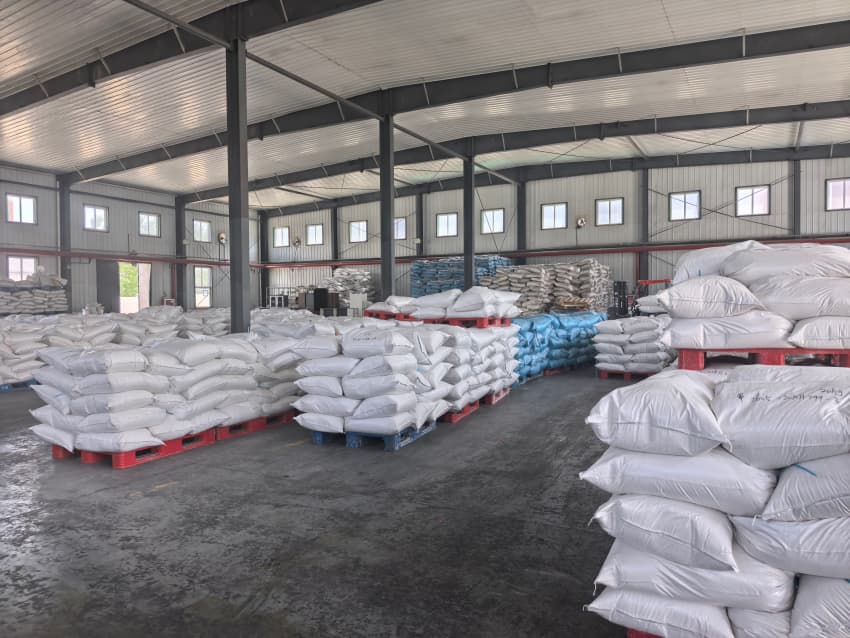
HPMC construction grade should be stored in a cool, dry place away from direct sunlight and moisture.
Storage:
Keep bags sealed when not in use
Store on pallets away from walls and floor
Avoid high humidity
Use within shelf life (typically 12–24 months)
Protect from heat and direct sunlight
Handling:
Use dust masks and gloves
Avoid generating dust
Clean spills promptly
Growing demand for green building certifications is driving interest in low-VOC, eco-friendly additives. HPMC is derived from renewable cellulose, which aligns with sustainability goals.
The rheological properties of HPMC make it suitable for extrudable cementitious inks used in 3D-printed construction. It provides the yield stress and water retention needed for printability.
Research is exploring the integration of HPMC with sensors to monitor crack formation or moisture levels in real time. This could enable self-monitoring building materials.
Producers are increasingly demanding customized HPMC grades tailored to specific applications, climates, and formulations.
Construction activity in emerging markets continues to drive demand for HPMC construction grade, particularly in Asia, Africa, and Latin America.
Q1: What is HPMC construction grade?
A: HPMC construction grade is a non-ionic cellulose ether optimized for use in cement-based and gypsum-based building materials. It provides water retention, workability, adhesion, and film formation.
Q2: What is the difference between construction grade and food grade HPMC?
A: Construction grade is optimized for alkaline cement systems and harsh site conditions. Food grade must meet purity requirements for human consumption.
Q3: What viscosity grade should I use for tile adhesive?
A: Medium to high viscosity grades (60,000 – 200,000 mPa·s) are typically used, depending on the adhesive classification and substrate.
Q4: What dosage of HPMC is used in mortar?
A: Typically 0.1% to 0.3% by weight of the dry mix, depending on the application and performance requirements.
Q5: How should HPMC be stored?
A: In a cool, dry place away from direct sunlight and moisture, with bags sealed when not in use.
Q6: Do you provide free samples?
A: Yes, free samples are available for formulation testing.
HPMC construction grade is more than an additive. It is the component that makes modern building materials work — enabling water retention, workability, adhesion, and durability in tile adhesive, wall putty, mortar, gypsum products, and waterproofing systems.
For producers, understanding the properties and selection criteria of HPMC construction grade is essential for formulating high-performance products. For buyers, choosing a reliable supplier with consistent quality and technical support is equally important.
As construction standards continue to rise and demand for sustainable, high-performance materials grows, HPMC construction grade will remain at the center of building material innovation.
Contact us today to request a free sample of HPMC construction grade for your application.